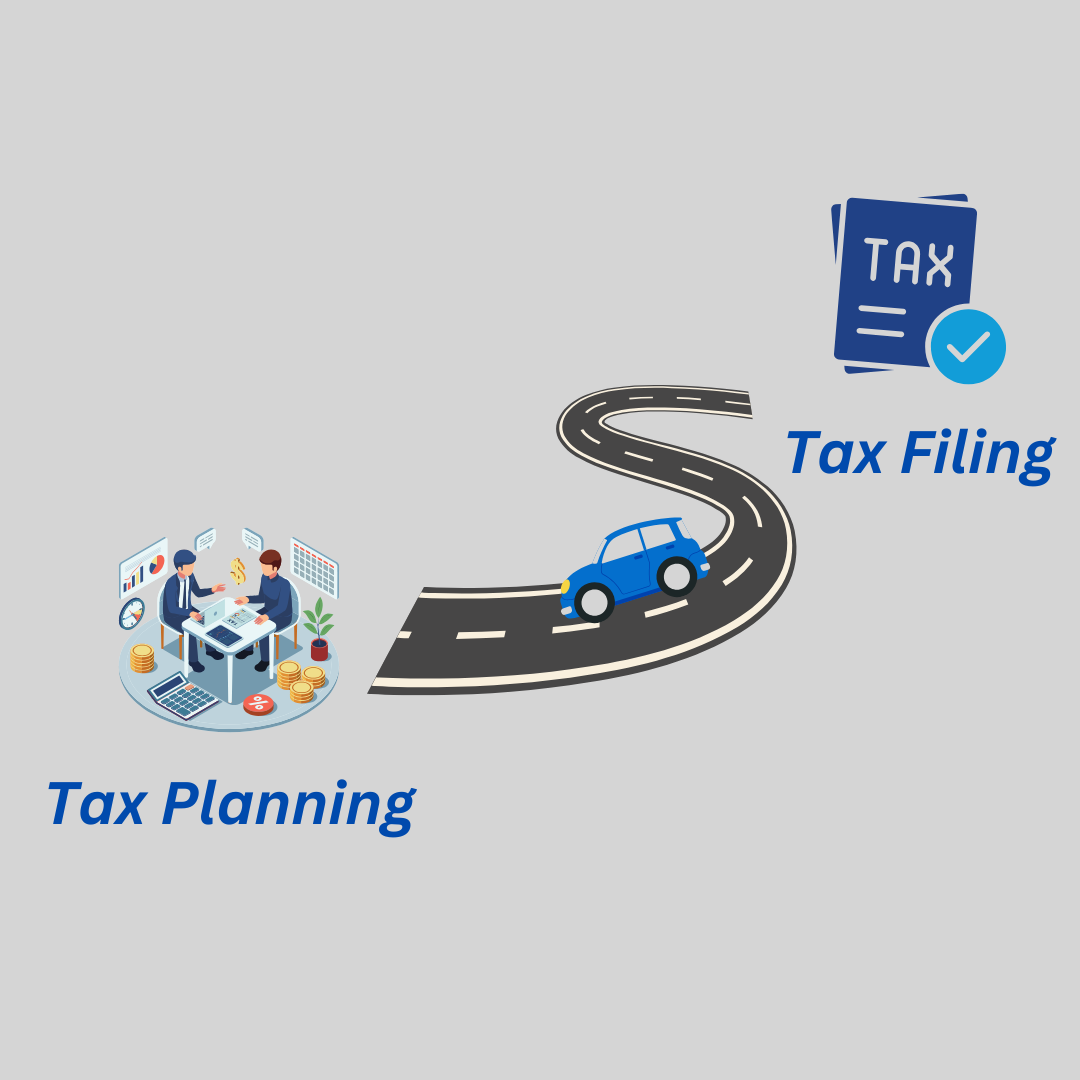
It’s that time of year again where people begin to think about their taxes. While taxes may be a thought in the back of the mind throughout the year, now it’s starting to move forward. Forms get gathered, documents get uploaded, and you start to worry about whether you will owe or have thoughts about what you may get back in return.
But for many individuals and business owners, the biggest problem isn’t how their taxes were filed. It’s that taxes were only addressed after all the important financial decisions had already been made.
That’s where the difference between tax filing and tax planning rears its head.
Tax Filing Looks Backward; Tax Planning Looks Forward
Tax filing is inherently backward-looking. It records what already happened: income earned, gains realized, deductions taken. By the time a return is prepared, the story is almost already written, outside of a few contributions that can be made to retirement accounts.
Tax planning works in the opposite direction. It asks questions before decisions are finalized. Should income be accelerated or deferred? Does it make sense to realize gains this year or wait? Is this bonus better taken as cash or deferred compensation?
I liken it to sitting in a car. The person filing your taxes can only look out the backseat and see what has passed. It you’re doing planning, then you can also look forward to avoid major issues on the roads ahead.
Once December 31 passes, most options to control taxes disappear. Filing tells you the result. Planning gives you choices.
You need both. But thinking the person that’s filing your taxes will save you money isn’t as likely to happen as you think. And if you’ve ever been surprised by a tax bill, you know how helpless it can feel.
Tax Filing Focuses on Compliance; Tax Planning Focuses on Strategy
A tax return exists to satisfy the IRS. Its job is accuracy, documentation, and compliance. That work matters, but it’s not designed to optimize outcomes.
Tax planning, on the other hand, is strategic. It looks across your financial life and evaluates how different pieces interact. Investments, compensation, retirement contributions, business income, and timing all matter.
For example, two people with the same income can have very different tax outcomes based on how that income is earned and where assets are held. Did they earn it as an employee? As a business owner? Did it come in the form of investment gains, or partnership dividends or many of the other forms of income that you might see in your life. Filing captures those differences. Planning manages them.
You need compliance to keep you in line with IRS rules. The strategy helps you keep more of what you earn.
Tax Filing Reacts to Results; Tax Planning Shapes Them
What’s the one question you ask when your tax filer finishes?
“What do I owe?”
The tax form is designed specifically to answer that question.
Tax planning answers a different question, however. It tries to figure out “What decisions can I make now to reduce my tax exposure in the future?”
That might mean adjusting withholding so taxes are paid more evenly throughout the year. It might mean coordinating capital gains with losses, increasing retirement contributions, or revisiting how business income flows through to your personal return. It may even require increasing taxes in the short term, to reduce taxes long-term (it happens).
Without planning, taxes tend to feel like a guessing game, one that you may or may not be close to. With planning, they become part of your broader financial picture, not a once-a-year surprise.
Tax Filing Is Transactional; Tax Planning Is Integrated
For most people, tax filing happens once a year. Documents go in. A return comes out. Then it’s forgotten until next spring.
Tax planning works best when it’s integrated into ongoing financial decisions. Investment moves affect taxes. Business growth affects estimated payments. Retirement contributions affect both current cash flow and future tax exposure.
When these pieces aren’t connected, inefficiencies creep in quietly. Gains get realized unnecessarily. Withholding falls behind. Cash gets tight at tax time.
When they are connected, decisions reinforce each other. Taxes become part of the plan, not an obstacle to it.
You need both, if you want your financial picture to blossom in the future, even as you’re looking back come tax time.